
The salary cap is one of the most important concepts in fantasy football. It prevents every manager from simply selecting the world’s best players and creates the strategic challenge of finding the greatest value within a limited budget.
Whether you’re playing season-long fantasy football or daily fantasy sports, understanding how salary caps work is fundamental to building competitive teams.
What Is a Fantasy Football Salary Cap?
A salary cap (sometimes called a team budget) is the maximum amount you are allowed to spend when selecting your squad.
Every player is assigned a value by the fantasy operator, and your total spending cannot exceed the available budget.
You are free to spend less than the maximum if you wish, but your team cannot be submitted if it exceeds the salary cap.
Why Salary Caps Exist
Without a salary cap, every manager could simply select the same collection of star players.
Salary caps encourage:
- Strategic decision-making.
- Budget management.
- Player research.
- Value hunting.
- Greater squad variety.
The challenge is not finding the best players — it’s finding the best combination of players.
Building a Team Within Budget
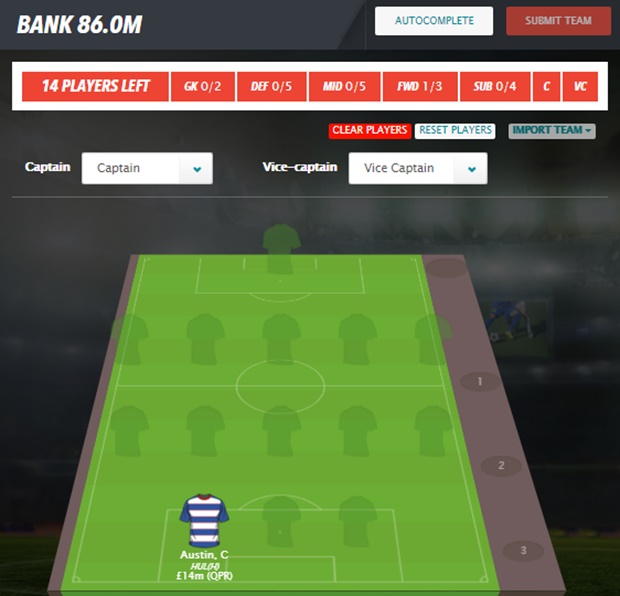
Most fantasy football contests display your remaining budget while you build your squad.
As each player is added:
- Your remaining salary decreases.
- Your average available spend per remaining player is updated.
- Your formation gradually fills.
This helps managers balance premium players with lower-priced options throughout the team-building process.
How Player Prices Are Set
Fantasy operators use different methods to value players.
Prices are commonly influenced by:
- Recent form.
- Historical fantasy points.
- Expected playing time.
- Fixture difficulty.
- Popularity.
- Statistical performance.
Some platforms update prices every gameweek, while others adjust values more frequently throughout the season.
Finding Value
The objective is not necessarily to spend your entire budget on expensive players.
Instead, successful fantasy managers look for players who are likely to outperform their assigned value.
These may include:
- Players returning from injury.
- New first-team starters.
- Players taking penalties or set pieces.
- Footballers enjoying favourable fixtures.
- Players whose prices have not yet caught up with recent performances.
Identifying under-priced players is one of the biggest long-term advantages in fantasy football.
Budget Management Tips
When building your team:
- Avoid spending too much in one position.
- Balance premium and budget selections.
- Leave enough salary to complete every position.
- Prioritise players expected to start.
- Monitor late injury and team news.
A player who doesn’t feature cannot score points, regardless of how talented they may be.
No Salary Cap Games
Not every fantasy football operator uses player pricing.
Some formats remove the salary cap entirely, allowing managers to select whichever players they wish while following other contest rules, such as limits on the number of players from the same club.
These contests simplify the selection process but place greater emphasis on tactical choices rather than financial planning.
Why Team News Matters
Salary management and team news go hand in hand.
Before confirming your line-up, always check:
- Official starting line-ups.
- Injury reports.
- Suspensions.
- Expected rotation.
- Fixture changes.
Even the best-value player becomes a poor selection if he doesn’t take to the pitch.
Key Takeaways
- Stay within the salary cap.
- Balance premium players with value picks.
- Focus on expected points rather than reputation.
- Always monitor official team news before the deadline.
- Remember that the strongest fantasy teams are usually the best-balanced ones.
