
This archived Fantasy Sports Portal case study examines how goalkeeper scoring, save volume and salary pricing influenced daily fantasy football selection on Mondogoal during the 2014/15 season.
Although fantasy football platforms and scoring systems have evolved since this analysis was first published, the central strategic question remains relevant: should managers pay a premium for a goalkeeper from a strong defensive team, or select a cheaper option with greater save potential?
Understanding Mondogoal Goalkeeper Scoring
Mondogoal awarded and deducted goalkeeper points across several areas of performance:
- Regular play: fouls won, minutes played and tackles won.
- Discipline: yellow cards, red cards and fouls committed.
- Saves: standard saves and penalty saves.
- Clean sheets: points awarded for preventing the opposition from scoring.
- Goals conceded: rewards for limiting goals and deductions when multiple goals were allowed.
These scoring categories created an important tension for fantasy managers.
A goalkeeper from a dominant side might have a better chance of keeping a clean sheet, but could face very few shots. A goalkeeper representing a weaker defence might concede, but could compensate through a high number of saves.
How Goalkeepers Earned Their Points
The following table groups the average points-per-game ranges of the top 20 goalkeepers who made at least 10 appearances during the 2014/15 season, up to and including Gameweek 37.
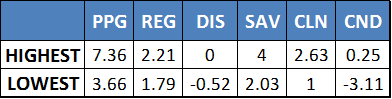
Only two goalkeepers—David Ospina and Fraser Forster—averaged more points from clean sheets and goals conceded than they did from saves.
That finding illustrated how important save volume was within the Mondogoal scoring model.
It also challenged the assumption that the goalkeeper playing behind the best defence would automatically represent the strongest fantasy selection.
Ranking Goalkeepers by Saves
The next table ranks the same group of goalkeepers according to the points they generated through saves.
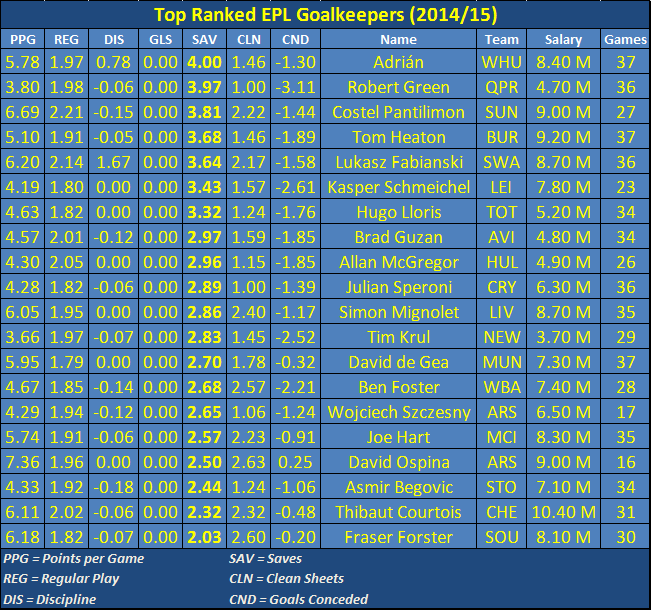
Regular-play and disciplinary scoring produced relatively little separation between the leading options.
The more significant differences appeared in three areas:
- Save volume.
- Clean-sheet probability.
- The number of goals conceded.
Goalkeeper analysis therefore required more than simply identifying the strongest defensive team.
Managers also needed to consider how many shots a goalkeeper was likely to face and whether those saves could offset the risk of conceding.
The Fine Margins of Goalkeeper Scoring
Under Mondogoal’s scoring system, a clean sheet was worth six points.
A goalkeeper who conceded once could still receive a one-goal-game reward, while further goals conceded resulted in additional deductions.
This created extremely fine scoring margins.
Joe Hart’s performance against Barcelona in the Champions League provides a useful example.
Hart produced an outstanding display and recorded a Mondogoal score of 13.8 points. However, if one additional shot had resulted in a goal, his score would have fallen significantly.
He would have lost:
- One point for the missing save.
- The three-point reward associated with conceding only once.
- A further two points for the additional goal conceded.
His score would therefore have dropped from 13.8 to approximately 7.8 points.
That volatility made premium goalkeeper spending difficult to justify.
For comparison, Eden Hazard averaged 13.41 points per game during the Premier League season. Investing a large proportion of the salary budget in a goalkeeper offered less predictable upside than paying for an elite attacking player.
Goalkeeper Salary and Value
The final part of the analysis compared goalkeeper salaries with their projected points per game.
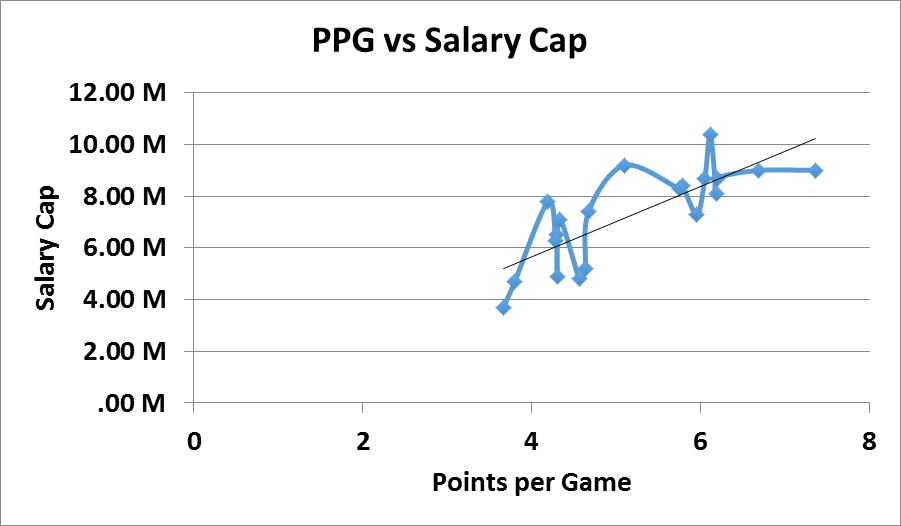
A line of best fit provided a rough indication of how each goalkeeper might have been priced according to projected output.
The practical process for fantasy managers was straightforward:
- Estimate how many points the goalkeeper might score in the upcoming fixture.
- Compare that projection with the player’s salary.
- Identify goalkeepers priced below the expected level for their projected return.
Mondogoal’s pricing appeared to give considerable weight to recent form. This created opportunities when a goalkeeper’s recent results did not accurately reflect the conditions of the next fixture.
Forecasting Save Potential
Projected shots on target could also be incorporated into goalkeeper analysis.
A goalkeeper expected to face several manageable efforts might offer strong save potential, even without a high clean-sheet probability.
However, not every shot on target carries the same level of danger.
A routine effort from distance is very different from a close-range chance with a high probability of becoming a goal. Simple shot counts therefore needed to be interpreted alongside the quality of the opposition’s chances.
Key Lessons from the Case Study
The original analysis produced several conclusions that remain useful in fantasy football today.
Do Not Judge Goalkeepers by Clean Sheets Alone
Save volume can compensate for goals conceded, particularly in scoring systems that reward every save.
Expensive Goalkeepers Are Not Always Better Value
Paying a premium for defensive reputation can reduce the budget available for attacking positions with greater scoring potential.
Fixture Conditions Matter
Managers should assess the expected match pattern, including possession, shot volume, opposition strength and the likelihood of a clean sheet.
Look for Mispricing
The best selection is often the goalkeeper whose expected return is greater than the level implied by his salary.
Goalkeeper Scoring Is Volatile
One additional goal conceded can remove clean-sheet points, alter goals-conceded rewards and dramatically reduce the final score.
Applying the Lessons to Modern Fantasy Football
Modern fantasy formats use different scoring systems, but the same analytical framework can still be applied.
Before selecting a goalkeeper, consider:
- The probability of a clean sheet.
- Expected shots on target faced.
- The quality of the opposition’s chances.
- Save and bonus-point potential.
- The goalkeeper’s price relative to alternative options.
- Whether spending less at goalkeeper improves the rest of the squad.
The objective is not simply to choose the goalkeeper from the strongest team.
It is to identify the option offering the best combination of opportunity, price and expected return.
Historical Context
This case study was originally produced during the 2014/15 season using Mondogoal data and its platform-specific scoring system.
The tables and player examples should therefore be viewed as a historical snapshot of daily fantasy football strategy at that time.
The enduring value of the analysis lies in its method: break scoring into components, project likely match conditions and compare expected output with salary.
