
Can Formula 1 Keep Max Verstappen?
Admin
- posted on
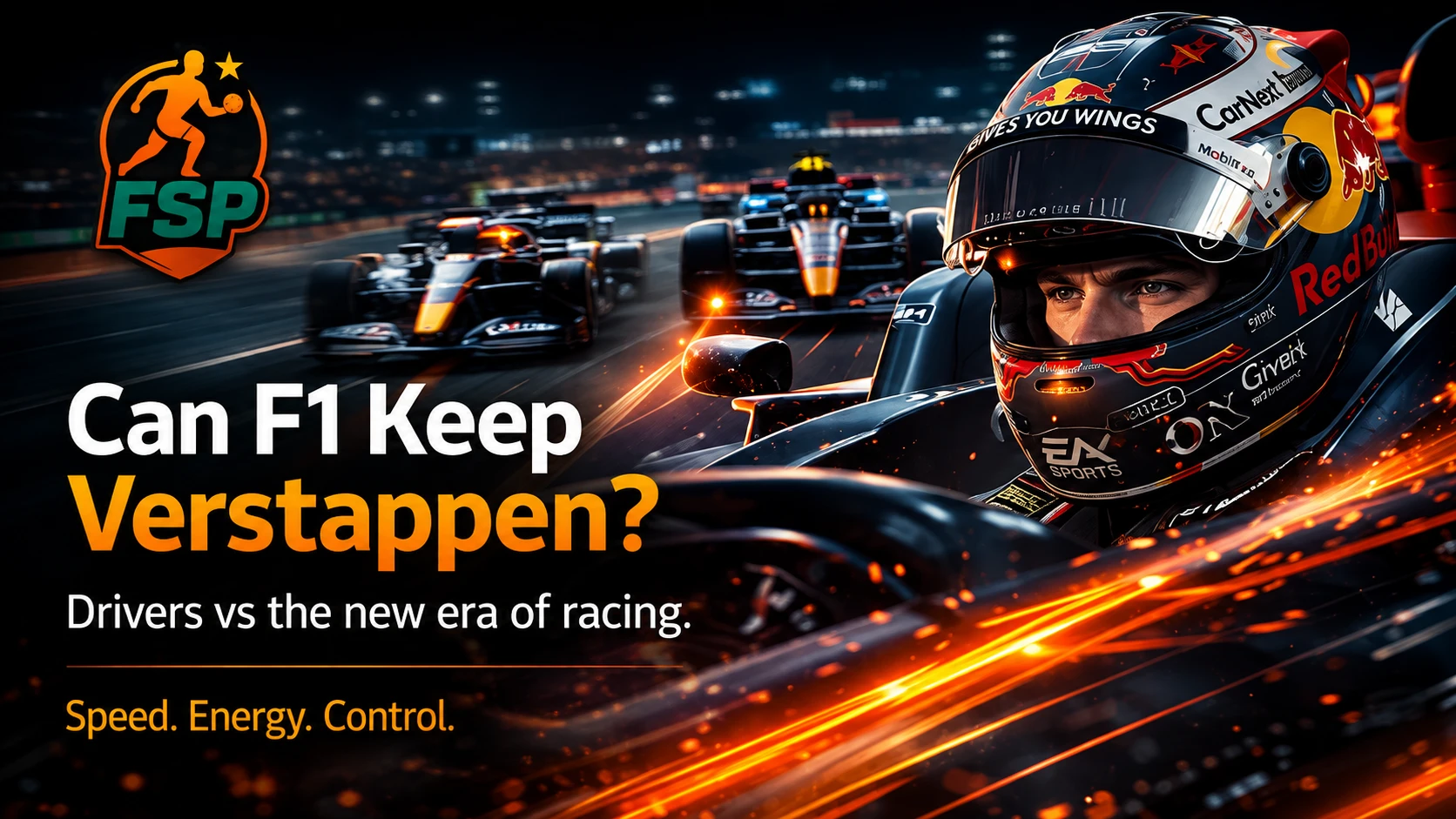
Can Formula 1 Keep Max Verstappen? The Growing Debate Around F1’s Future
Max Verstappen’s recent comments following the Japanese Grand Prix have reignited debate around Formula 1’s evolving regulations. As concerns grow over energy management, safety, and driver enjoyment, the sport faces a delicate balancing act between innovation and maintaining its core identity.
 A Champion Questioning the Direction of Formula 1
After the Japanese Grand Prix, four-time world champion Max Verstappen publicly expressed frustration with the current direction of Formula 1. His concerns centre on the increasing emphasis on hybrid power units and energy management, which he believes detract from the natural feel of driving.
Rather than being linked to performance struggles, Verstappen’s comments reflect a broader discomfort with how modern F1 cars are driven. The current technical framework requires drivers to constantly manage battery deployment and recovery, altering traditional racing instincts.
This sentiment is not isolated. Several drivers have voiced similar concerns, highlighting a growing divide between the spectacle of racing and the experience behind the wheel.
The Role of Hybrid Regulations and Energy Management
Formula 1’s current regulations place significant importance on the balance between internal combustion engines and electrical energy. With power units now heavily reliant on hybrid systems, drivers must carefully manage energy usage throughout a lap.
This has introduced concepts such as “lift and coast” and “super-clipping,” where drivers adjust throttle input or energy deployment to optimise performance. While technically advanced, these strategies can reduce the natural rhythm of racing.
In qualifying, this has led to particular criticism. High-speed corners—once a defining challenge of circuits like Suzuka—are now approached differently, as drivers prioritise energy recovery over outright speed.
Safety Concerns Highlighted in Japan
The Japanese Grand Prix brought renewed attention to safety implications. Several drivers reported significant speed differentials between cars operating in different energy modes, particularly in high-speed sections.
Incidents involving large closing speeds have raised questions about whether the current balance between performance and energy recovery introduces unnecessary risk.
According to drivers and team representatives, these differences can reach substantial levels, creating unpredictable scenarios during both race starts and overtaking phases.
The Challenge Facing Formula 1 and the FIA
Formula 1’s governing body, the FIA, alongside teams and manufacturers, faces a complex challenge. Adjusting the regulations to improve driver experience without compromising safety or the competitive balance is not straightforward.
Potential solutions include modifying energy recovery limits or adjusting the power ratio between combustion and electrical systems. However, each change introduces trade-offs that must be carefully evaluated.
For example, increasing energy recovery rates could reduce the need for lift-and-coast strategies but may also amplify speed differences between cars, potentially worsening safety concerns.
Entertainment vs Driver Experience
From a spectator perspective, the current era of Formula 1 has delivered competitive and engaging races. Battles involving multiple overtakes and strategic variation have been widely appreciated by audiences.
However, drivers have questioned whether this entertainment value comes at the expense of the purity of racing. Some have described the modern format as overly dependent on energy systems rather than driver skill alone.
This tension between entertainment and authenticity is central to the current debate.
What Could Change in the Future?
Looking ahead, Formula 1 has the opportunity to refine its regulations. Discussions around future seasons include potential adjustments to engine power distribution, aiming to rebalance the role of hybrid systems.
Any significant change would require agreement among manufacturers and stakeholders, making rapid implementation unlikely. Nevertheless, the ongoing dialogue suggests that the sport is aware of the concerns and actively exploring solutions.
For drivers like Verstappen, the key issue is whether these changes can restore the sense of enjoyment and connection that defines elite motorsport.
A Defining Moment for the Sport
Formula 1 stands at a critical point. Its technological evolution has brought innovation and new audiences, but it must also ensure that the essence of racing remains intact.
The concerns raised by leading drivers highlight the importance of maintaining a balance between progress and tradition. Whether Formula 1 can achieve this balance may shape the sport’s future for years to come.
Note: This article is intended for informational and editorial purposes. Always engage with sports and related activities responsibly.

