
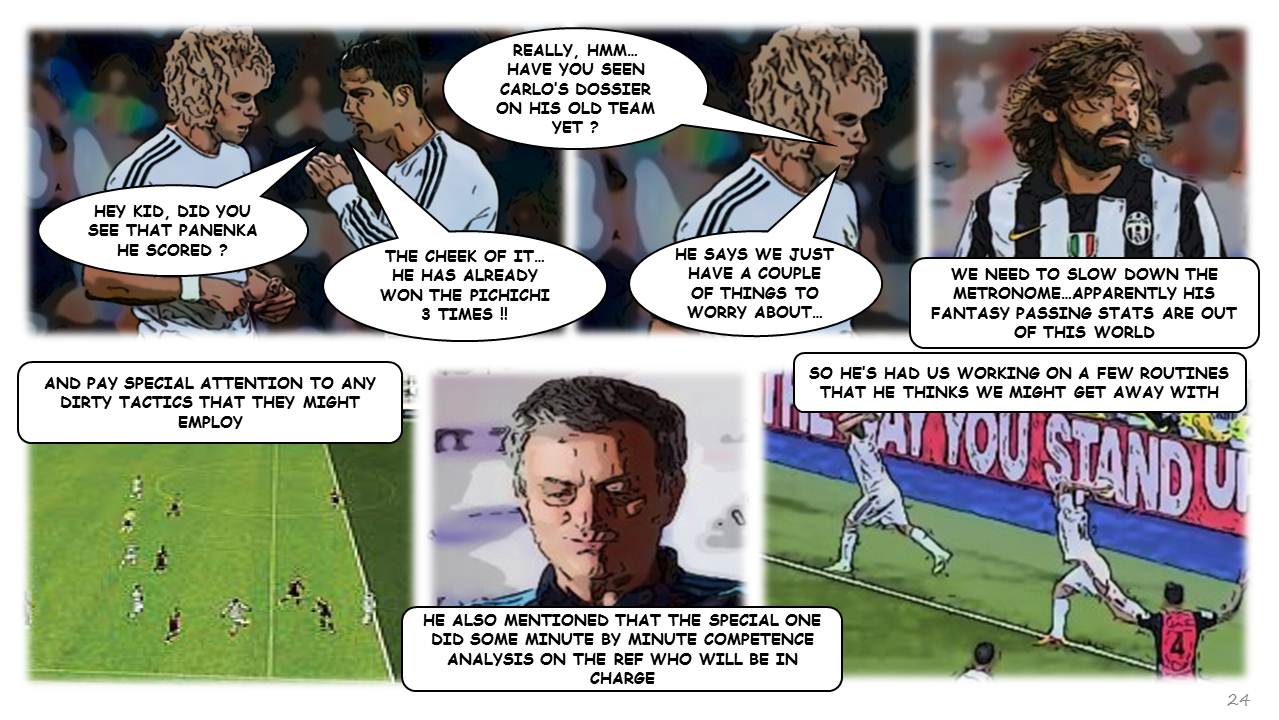
Recovering from injury, The Kid is delighted to see another audacious Panenka from his teammate, but he fears the club’s growing obsession with individual awards could leave them vulnerable against more tactically disciplined opponents.
While The Boss continues chasing another Pichichi Trophy, rivals are quietly studying Madrid’s every weakness. The Kid begins to wonder whether football matches are won by goals or by preparation.
It’s Not All About the Pichichi
The Kid watches another spectacular Panenka penalty with admiration.
His teammate has already established himself as one of the world’s greatest goalscorers and another Pichichi Trophy appears well within reach.
Yet instead of celebrating, The Kid finds himself becoming increasingly uneasy.
The Pichichi Obsession
Winning Spain’s Golden Boot is a remarkable achievement.
The Kid knows that better than most.
But football’s biggest prizes are won collectively, not individually.
He worries that too much emphasis is being placed on personal accolades while opponents are concentrating on something altogether more dangerous.
Studying the Opposition
The conversation turns to Madrid’s upcoming Italian opponents.
Their manager has reportedly prepared an extensive dossier covering every aspect of Madrid’s play.
Nothing has been overlooked.
Passing patterns.
Set-piece routines.
Even the smallest tactical habits have been analysed.
The Metronome
Particular attention is given to Madrid’s midfield conductor.
His remarkable passing statistics have become the heartbeat of the team.
The Italian plan is simple.
Slow the metronome down.
Disrupt the rhythm.
And suddenly Madrid become a far less predictable side.
Winning the Tactical Battle
The Kid also hears that The Special One has gone even further.
Minute-by-minute analysis has reportedly been carried out on the referee appointed for the match.
Potential flashpoints.
Disciplinary tendencies.
Gamesmanship.
Nothing appears to have escaped attention.
Football preparation has become almost forensic.
Fantasy Football Lessons
For The Kid, the comic carries a familiar fantasy football message.
Goals always matter.
But so do tactics, possession, discipline and context.
Managers who only focus on headline statistics often overlook the details that ultimately decide matches.
The same principle frequently separates successful fantasy football managers from everyone else.
The Football Inspiration Behind the Comic
This episode was inspired by Cristiano Ronaldo’s pursuit of successive Pichichi awards, Andrea Pirlo’s extraordinary influence as football’s midfield metronome and the meticulous tactical preparation associated with José Mourinho before major European fixtures.
It reflects the growing use of detailed opposition analysis, data and scouting reports that became increasingly important during the mid-2010s.
Storybook imagines how The Kid would view the balance between individual brilliance and collective preparation.
Characters Featured
The Kid
Still recovering from injury, The Kid looks beyond goals and individual awards, worrying that tactical preparation may ultimately decide the biggest matches.
The Boss
The Boss remains determined to maximise his team’s attacking potential, although The Kid fears too much attention is being paid to individual honours.
The Italian Maestro
The midfield metronome represents the type of player capable of controlling an entire match through intelligence, positioning and flawless distribution.
The Special One
Known for meticulous preparation, he leaves nothing to chance, studying opponents, officials and every tactical detail before the biggest occasions.
Behind the Gag
The strip contrasts two very different approaches to football.
One side chases goals, trophies and individual records.
The other quietly prepares detailed tactical plans.
The Kid suspects that when the biggest matches arrive, preparation often proves just as valuable as talent.
Looking Back
Originally published in 2015, It’s Not All About the Pichichi reflected the tactical arms race developing across European football.
Managers were increasingly relying on data, video analysis and exhaustive scouting, while supporters continued debating individual awards and goalscoring records.
Storybook combined those contrasting viewpoints into another fantasy football lesson wrapped in football satire.
